Iraq Receives a 'Yes, But' from Europe
Listen to the article. The audio text is automatically generated by a system.
Riviera Plus
·6 minutes read
Listen to the article, the audio text is automatically generated by a machine system.
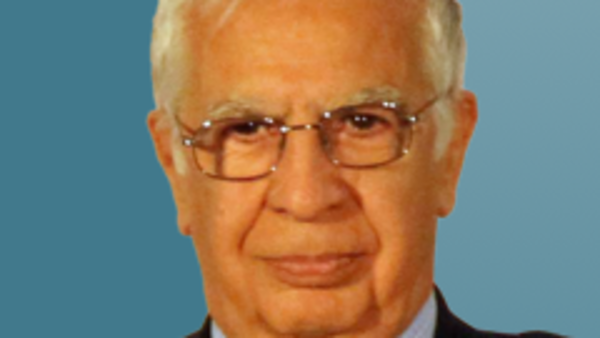
"Yes, but" "but" is a very big word! This was the response of French officials - who spoke on the condition of anonymity - when asked if they were impressed by the visiting Iraqi Prime Minister, Ali Falah Al-Zaydi.
The "yes" part of the answer focused on Al-Zaydi's vision, (41 years old), who appears to be a young politician with enough charisma to ensure a longer continuity in the Iraqi political scene, which has witnessed the rapid rise and fall of politicians since the fall of the Ba'ath Party's rule.
As for the "but" part, it centered around whether the newcomer to the political arena would show enough determination to confront a mix of local and external forces determined to keep "post-Ba'ath Iraq" in a state of confusion and loss. As is customary on such occasions, several prominent figures were called upon to sign a series of memorandums of understanding, either with the French state or with private sector companies.
For its part, the energy giant partially owned by the government, "Total Energies," agreed to increase its investments in Iraq from $12 billion to $16 billion, without specifying a particular timeframe.
The visit also witnessed the signing of another memorandum of understanding with another semi-governmental institution to build a massive data center near Baghdad. Al-Zaydi also agreed to revive part of the special relationship that Iraq had with France during the era of Saddam Hussein in military fields.
Although the agreement did not explicitly state this, it hinted that Iraq would shift part of its arms purchases from the United States to France. Another memorandum of understanding includes the establishment of a complex for manufacturing drones within Iraq.
The golden pens continued their activity the next day when Al-Zaydi, buoyed by his meeting that lasted longer than expected with President Emmanuel Macron, headed to Berlin to meet with Chancellor Friedrich Merz. Among the issues that topped the Berlin discussions was the need to diversify Iraqi energy export routes. The implicit meaning of this proposal is Paris and Berlin's assumption that Iran will continue its maneuvering and risky policies in the Strait of Hormuz.
For their part, diplomatic observers in Paris and Berlin stated that Iraq under Al-Zaydi appears to be a more promising partner compared to previous prime ministers since the fall of the Ba'ath regime. However, Al-Zaydi still has to pass several tests.
According to a senior French source, 'the first test is to prove his independence from the regime in Tehran.' This seems to be a very relevant proposition; Al-Zaydi could not have assumed the position of Prime Minister without the approval of the Shiite and Kurdish parties linked to Tehran.
But my intuition tells me that Al-Zaydi - and an entire generation of new Iraqi politicians - yearn to break free from the shackles imposed by the Khomeinists in the post-Saddam era. We must not forget that during the presidencies of Barack Obama and Joe Biden, Iranian intervention in Iraqi affairs enjoyed implicit acceptance from Washington. With the Khomeini regime experiencing severe weakness and its inability to formulate a coherent foreign policy, the opportunity has arisen for Iraqis to pursue their own path. Another key test for Al-Zaydi is his ability to fulfill his promise to disband the armed factions that act as a state within a state. It seems that both Macron and Meretz spent a significant portion of their discussions with Al-Zaydi focusing on this 'urgent need.'
Naturally, a government that is unable to prevent foreign-backed militias from launching rockets and drones towards other countries cannot be treated as a serious partner in defense and security issues. In this context, Al-Zaydi's record so far shows a clear disparity, at best.
Among the five factions under Tehran's control, only two have agreed to come under the umbrella of official security agencies. Certainly, this is a positive step, but it is insufficient; these groups will retain part of their weapons and hierarchical leadership structure in a lighter form, nominally operating under a larger official system.
In contrast, three other factions - the most unruly - have evaded any agreement with Al-Zaydi's government, using 'the fight against ISIS' as a pretext to mask their actions. The disbanding of these factions remains an indispensable condition for Iraq to be accepted as a serious partner by the European Union. Whether the theatrical performance combining elements of tragedy and comedy continues in the Strait of Hormuz, the idea of linking Iraq's vast oil resources to European markets via pipelines extending to the Mediterranean seems politically and commercially logical.
However, this project remains contingent on two main pathways: first, that Syria - the more commercially viable route - achieves a degree of stability under the rule of law, which may seem elusive. To achieve this, Israel and Turkey must curb their ambitions in Syria, where they seek to establish spheres of influence near their borders with this war-torn country.
The second path that passes through the Kurdistan region of Iraq to Turkey also requires a change in Ankara's plans aimed at seizing the "right of supervision" over parts of northern Iraq, while fueling separatist tendencies among the Turkmen under the pretext of the expiration of the famous "Treaty of Lausanne."
In addition, France and Germany face a series of outstanding issues with Baghdad, which are small irritants that undermine trust between the parties. Berlin, for its part, is concerned about a few dozen German citizens of Turkish Kurdish origin who are languishing in Iraqi prisons. These alleged militants moved to Iraq to establish a branch of the dissolved Kurdistan Workers' Party to launch armed operations against Iran, before being captured by Iraqi Kurdish groups supported by Iran and handed over to Baghdad authorities.
France's main concern relates to the financial compensations that Iraq is obligated to pay to several French companies that were harmed during the overthrow of Saddam.
For its part, Iraq possesses the geopolitical, demographic, and cultural components that qualify it to play a larger role than its current size, especially at a time when the entire region is poised for a historic reshaping process.
Iraq also needs to restore the authority of the central government, achieve greater harmony between the two sides of the Kurdistan region, delineate the continental shelf boundaries with Kuwait, build closer ties with the Gulf Cooperation Council and Jordan, and reopen and activate the Shatt al-Arab, without adopting an anti-Iranian stance. Except for the uncalculated operations of the aforementioned Tehran agents, Iraq has distanced itself from the quagmire that led to the outbreak of a senseless war in the region.
The question now is: Will Al-Zaydi take advantage of this opportunity? The answer: Yes, but with a condition... a very big condition.
Quoted from "Asharq Al-Awsat"
Suggested
Read also
 Technology
Meningitis...what are the danger signs that you should pay attention to?
 Politics
Gaza floods.. The “peace council” led by Trump rebukes Israel for its inadequate response
 Technology